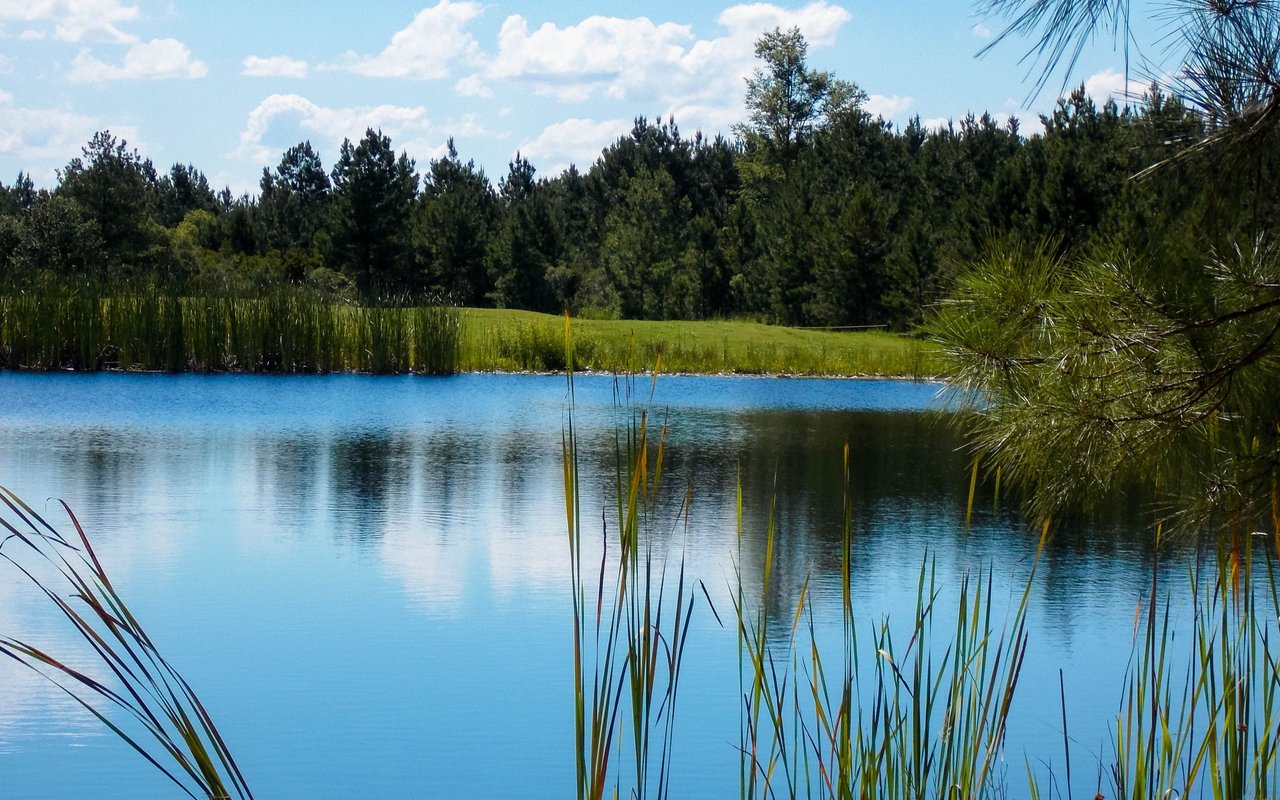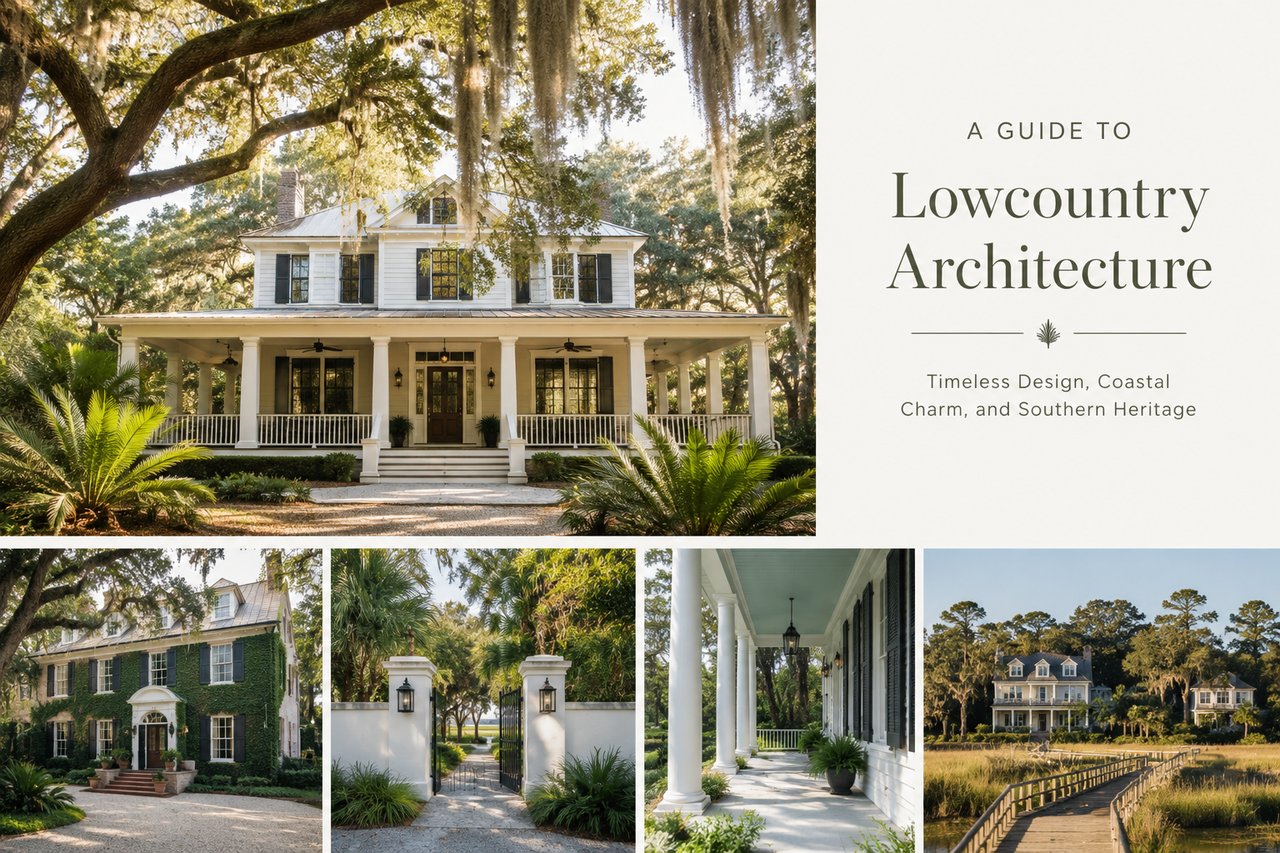
There is something unmistakable about a Lowcountry home. Wide porches shaded by deep rooflines, tall windows catching the coastal breeze, live oaks draped in Spanish moss, and homes that seem to settle naturally into the marsh, river, and maritime landscape.
Across Hilton Head Island, Bluffton, Beaufort, and the surrounding South Carolina Lowcountry, architecture tells a story that is centuries old. Yet what makes Lowcountry architecture so enduring is that many of its most recognizable features weren't originally chosen simply for their beauty. They were practical responses to the region's warm climate, abundant waterways, intense summer sun, and coastal environment.
Today, those same elements have become hallmarks of some of the most desirable luxury homes in South Carolina.
Whether you're considering buying a home in Hilton Head Island, building in Bluffton, exploring luxury communities such as Palmetto Bluff, or simply curious about the homes that give this area its distinctive character, understanding Lowcountry architecture offers a fascinating glimpse into what makes this region so special.
What Is Lowcountry Architecture?
Lowcountry architecture is a regional architectural style associated primarily with the coastal areas of South Carolina and Georgia.
Its roots can be traced to early homes built throughout Charleston, Beaufort, and the Sea Islands, where homes had to accommodate heat, humidity, heavy rainfall, flooding, and coastal breezes long before air conditioning existed.
As a result, traditional Lowcountry homes often feature:
- Elevated foundations
- Expansive covered porches
- Tall ceilings
- Large windows
- Symmetrical façades
- Steep or hipped rooflines
- Dormer windows
- Shutters
- Open, airy interiors
- Natural materials
- Strong connections between indoor and outdoor living
Modern Lowcountry homes may interpret these elements differently, but the underlying philosophy remains remarkably consistent: design the home around the landscape and climate rather than separating it from them.
Why Are Lowcountry Homes Often Elevated?
One of the most recognizable characteristics of South Carolina Lowcountry architecture is an elevated first floor.
Historically, raising a home above ground level helped protect the structure from moisture and flooding while also encouraging airflow beneath the house.
Today, elevation remains especially important in coastal areas where flood zones and building requirements can influence home design.
In newer luxury homes, the space beneath an elevated residence may also be incorporated into garages, storage areas, workshops, golf cart parking, or covered outdoor living spaces, depending upon applicable building and flood requirements.
The result is an architectural feature that can be both practical and beautiful.
The Lowcountry Porch: More Than a Pretty Feature
If one feature defines the Lowcountry home, it may be the porch.
Before air conditioning, deep covered porches provided essential shade and created comfortable outdoor spaces where homeowners could take advantage of coastal breezes.
Today, porches remain central to the Lowcountry lifestyle.
Depending on the home, you might find a gracious front porch overlooking a live oak-lined street, a screened porch facing the marsh, or an expansive rear veranda designed for entertaining.
In many luxury homes throughout Hilton Head Island and Bluffton, outdoor living has evolved even further to include outdoor kitchens, fireplaces, pools, screened living rooms, retractable doors, and covered entertaining areas.
The porch is no longer simply an architectural detail. In the Lowcountry, it is often another living room.
Haint Blue Porch Ceilings
Look up while walking through some of the Lowcountry's older neighborhoods and you may notice porch ceilings painted a soft blue or blue-green.
Often called "haint blue," the tradition has deep roots in Southern coastal culture.
Today, homeowners continue to use shades ranging from barely-there blue to muted aqua because they complement the natural colors of the coast and create a beautiful transition between the home and the sky.
It's a small architectural detail, but one that immediately feels at home in the South Carolina Lowcountry.
Shutters, Tall Windows and Coastal Breezes
Traditional Lowcountry homes were designed to encourage natural ventilation.
Tall windows could be opened to capture breezes, while shutters provided protection and shade. High ceilings allowed warm air to rise, helping living spaces remain more comfortable during hot South Carolina summers.
Modern homes may rely on sophisticated HVAC systems and impact-rated windows, but designers continue to incorporate these historic proportions because they create the light-filled interiors buyers often associate with coastal South Carolina homes.
Large windows also serve another purpose: connecting the home with its surroundings.
When your backyard overlooks a tidal creek, lagoon, golf course, maritime forest, or the May River, the view becomes part of the architecture.
Metal Roofs and Distinctive Rooflines
Another architectural feature commonly associated with Lowcountry homes is the metal roof.
Metal roofing works beautifully with coastal architecture and can provide a striking contrast against white siding, painted brick, or natural materials.
Dormers, cupolas, chimneys, gables, and broad overhangs can add additional dimension and character.
In newer communities, you'll often see architects combining traditional roof forms with cleaner, more contemporary lines—creating homes that feel unmistakably Lowcountry without looking historic.
Tabby, Brick and Natural Materials
The materials used throughout the Lowcountry often reflect the landscape and history of coastal South Carolina.
One particularly distinctive material is tabby, traditionally made using a mixture that included oyster shells, lime, sand, and water. Today, tabby-inspired finishes continue to appear on walls, foundations, fireplaces, garden structures, and architectural accents.
Brick is another longtime favorite, particularly in Beaufort and Bluffton.
Newer luxury homes may combine painted brick, board-and-batten siding, lap siding, natural wood, stone, tabby, and metal roofing to create a layered appearance that feels refined without feeling overly formal.
The Influence of Charleston and Beaufort Architecture
You don't have to travel far to see how architecture changes across the South Carolina coast.
Historic Charleston architecture is known for Charleston Single Houses, piazzas, formal gardens, colorful façades, and narrow urban lots.
Beaufort architecture, meanwhile, offers some extraordinary examples of antebellum homes characterized by generous porches, classical columns, raised foundations, and magnificent live oaks.
As development expanded throughout Hilton Head Island and Bluffton, architects borrowed from these traditions while adapting homes to larger lots, golf communities, waterfront settings, and modern lifestyles.
The result is the contemporary Lowcountry home we recognize today.
Old Town Bluffton: Lowcountry Character on a Smaller Scale
For anyone interested in Lowcountry architecture, Old Town Bluffton deserves special attention.
Its streets offer an eclectic mix of historic cottages, renovated homes, churches, galleries, restaurants, and newer residences designed to complement the town's established character.
Front porches sit close to the street. Live oaks form natural canopies overhead. Homes often feature metal roofs, shutters, simple siding, and relaxed landscaping.
It's architecture that encourages interaction with the neighborhood—and perfectly reflects Bluffton's famously laid-back personality.
Palmetto Bluff and the Evolution of Luxury Lowcountry Design
Few places demonstrate the evolution of modern Lowcountry architecture as beautifully as Palmetto Bluff in Bluffton, South Carolina.
Here, traditional Southern architectural influences are combined with sophisticated contemporary design.
Depending upon the neighborhood, homes may incorporate expansive porches, courtyards, carriage houses, tabby details, reclaimed wood, metal roofs, floor-to-ceiling windows, outdoor fireplaces, and interiors designed to open almost completely to the outdoors.
The best homes don't compete with the surrounding maritime forest, rivers, and wetlands. They seem to belong there.
That idea—architecture working with the landscape rather than overpowering it—is perhaps the defining principle of today's luxury Lowcountry design.
Hilton Head Island: Architecture Designed Around Nature
Architecture on Hilton Head Island has its own distinctive history.
The island's residential communities were largely planned around preserving the natural environment. In many neighborhoods, mature trees, setbacks, landscaping, and understated exterior colors help homes blend into the island's maritime forest.
That's why a home that might appear relatively modest from the street can reveal spectacular architecture once inside—with soaring ceilings, walls of glass, lagoon or golf views, expansive outdoor spaces, and private pools hidden from view.
In communities throughout Sea Pines, Hilton Head Plantation, Long Cove Club, Wexford, Port Royal, and Indigo Run, you'll find everything from classic Lowcountry homes to contemporary coastal residences.
Despite their differences, many share one principle: nature remains the star.
Modern Lowcountry Architecture
Lowcountry architecture continues to evolve.
Today's buyers frequently want the character of traditional Southern design without sacrificing the conveniences of contemporary living.
That has led to a style sometimes described as Modern Lowcountry or Lowcountry Contemporary.
These homes may combine traditional elements—porches, metal roofs, shutters, natural materials, and elevated construction—with:
- Open-concept floor plans
- Oversized windows and doors
- Minimalist interiors
- Large kitchen islands
- Sculleries and working pantries
- Indoor-outdoor entertaining spaces
- Outdoor kitchens
- Resort-style pools
- Dedicated home offices
- Golf cart garages
- Smart-home technology
The result feels distinctly Southern, but decidedly current.
What Should Buyers Know About Lowcountry Homes?
Architecture in coastal South Carolina is about more than aesthetics.
If you're purchasing a home in Hilton Head Island, Bluffton, Beaufort, or elsewhere in the Lowcountry, it's important to understand how the home's design relates to the coastal environment.
Depending upon the property, buyers may want to consider flood zones and elevation, wind and hail insurance, roof age and materials, drainage, crawlspace conditions, moisture management, stucco systems, windows and doors, tree restrictions, architectural review board requirements, and community design guidelines.
Those considerations can vary significantly from one neighborhood to another.
A historic cottage in Old Town Bluffton, a waterfront home on Hilton Head Island, and new construction inside a private golf community can present very different ownership considerations—even though all three might be described as Lowcountry homes.
Why Lowcountry Architecture Remains So Desirable
Trends come and go, but Lowcountry architecture has endured because it isn't based solely on appearance.
It is based on place.
The porches provide shade. The windows embrace the landscape. The elevated foundations acknowledge the water. The materials reflect the natural environment. And the interiors are designed around a lifestyle that often moves effortlessly between indoors and outdoors.
Perhaps that is why the best Lowcountry homes never seem overly designed.
They simply feel like they belong here.
Finding Your Lowcountry Home
For buyers relocating to the South Carolina coast, choosing a home often means choosing much more than a floor plan.
You may be deciding between waterfront living on Hilton Head Island, historic charm in Old Town Bluffton, a private golf community, a new construction home, or a luxury residence surrounded by the rivers and maritime forests of the Lowcountry.
Understanding the architecture—and why homes here are built the way they are—can help you better evaluate not only what you love aesthetically, but how a property will function for years to come.
As a local real estate advisor serving Hilton Head Island, Bluffton, Beaufort, and the surrounding South Carolina Lowcountry, I help buyers and sellers navigate the details that make coastal properties unique.
If you're considering buying, selling, building, or relocating to the Lowcountry, I'd be happy to help you explore the communities and architectural styles that best fit the way you want to live.
Because in the Lowcountry, a home isn't simply where you live. It's part of the landscape!