When evaluating a luxury property, it's natural to focus on the details that define its character — architectural pedigree, water views, designer finishes, and the lifestyle the home promises. But behind every exceptional property is a network of mechanical systems that quietly determine whether that lifestyle stays effortless. Among them, the water heater is one of the most frequently flagged items during luxury home inspections and insurance underwriting, particularly in coastal and waterfront properties where humidity and salt air accelerate wear.
Understanding what to look for before you’re under contract is one of the simplest ways a sophisticated buyer can protect their investment, negotiate from a position of knowledge, and move toward closing with complete confidence.
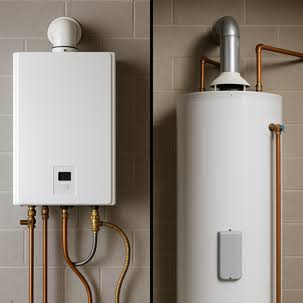
Traditional Tank vs. Tankless Water Heaters: What Luxury Buyers Should Know
Not all water heaters are created equal — and in high-end homes, the choice between a traditional tank and a tankless system can affect everything from daily comfort to long-term maintenance costs.
Traditional Tank Water Heaters
- Store 40–80 gallons of hot water
- Lower upfront installation cost
- Hot water supply is finite — a consideration in larger homes with multiple bathrooms
- Average lifespan: 8–12 years
- Higher risk of water damage if the tank fails, particularly on upper floors
Tankless (On-Demand) Water Heaters
- Heat water only as needed, offering essentially unlimited hot water — a sought-after feature in homes with multiple primary suites, spas, or soaking tubs
- Higher upfront investment, but often preferred in premium properties
- Average lifespan: 15–25 years
- Require annual descaling — maintenance that is not optional, especially in areas with hard water
For luxury buyers comparing properties, the type and condition of the water heater can be a meaningful indicator of how well a home has been maintained overall.
Why Placement Matters More Than Most Luxury Buyers Realize
Attic-Installed Water Heaters Carry Elevated Risk
In many luxury homes — especially those with vaulted ceilings, multiple stories, or complex rooflines — water heaters are tucked into attic spaces to preserve clean architectural lines. While this maximizes living space and design flexibility, it comes with real risk:
- Leaks travel downward, often damaging ceilings, walls, millwork, and flooring before they're discovered
- Failures are frequently identified only after damage has already occurred
- Heat and humidity in attic environments accelerate corrosion
- Insurance carriers increasingly scrutinize attic-installed systems, particularly in luxury and coastal markets
- Hard to replace if the water heater was installed before a scuttle hole was installed
Bottom line: an attic-installed water heater in a luxury home is never a “set it and forget it” feature — it requires intentional safeguards.
Drain Pans vs. Leak Alarms: Know the Difference
Two protective measures are commonly confused, but they serve very different purposes:
- Drain pans are required for attic or interior installations and are designed to catch water — but only if everything functions as intended
- Leak alarms detect moisture in real time and alert homeowners immediately, often integrating with smart home systems already common in luxury properties
Best practice for high-value homes: attic-installed water heaters should have both a drain pan and a leak alarm — a small investment relative to the potential cost of undetected water damage in a luxury interior.
What Sophisticated Buyers Should Ask Before Closing
Before finalizing the purchase of any luxury home, confirm the following:
- Age of the water heater
- Location (attic, garage, mechanical room, crawlspace)
- Presence of a drain pan, if installed in an attic or interior space
- Whether a leak alarm has been installed
- Maintenance history, particularly for tankless systems
Water heaters older than 10–12 years are common negotiation points in luxury transactions — and a well-informed buyer is better positioned to negotiate from strength.
Ownership Reality: What Maintenance Actually Looks Like
Traditional Tank
- Annual drain and flush recommended
- Sediment buildup shortens lifespan and reduces efficiency
Tankless
- Annual descaling required
- Skipping maintenance can void manufacturer warranties — an avoidable cost in any luxury home
In short, no maintenance means a shorter lifespan and a higher risk of costly failure, regardless of how much the system costs to install.
Why This Matters When Buying a Luxury Property
- Inspectors will note the age, location, and any protective measures in place
- Insurance coverage and premiums can be directly affected by older or unprotected systems — a meaningful consideration for high-value coastal properties
- Proactive knowledge allows luxury buyers to negotiate wisely or walk into closing with full confidence, rather than facing surprises after the fact
Final Takeaway
A water heater doesn’t need to be brand new to be a non-issue in a luxury transaction — but it does need to be:
- Properly installed
- Actively maintained
- Appropriately protected
Understanding this before you buy keeps inspections clean and negotiations focused on value, design, and lifestyle — not unexpected repairs.
Frequently Asked Questions
How long do water heaters typically last in luxury homes?
Traditional tank water heaters generally last 8–12 years, while tankless systems can last 15–25 years with proper annual maintenance.
Are tankless water heaters worth it in a luxury home?
Many luxury buyers prefer tankless systems for their endless hot water supply, which suits homes with multiple primary suites, soaking tubs, or spa features. They require a higher upfront investment and consistent annual maintenance.
Why are attic water heaters considered higher risk?
Attic installations can leak undetected, with water damage spreading through ceilings and walls before it's discovered. Heat and humidity also accelerate corrosion, which is why insurers scrutinize these systems closely.
What should I ask about a water heater before buying a luxury home?
Confirm its age, location, the presence of a drain pan and leak alarm (if installed in an attic or interior space), and its maintenance history — especially for tankless systems.
Have Questions About Inspections or What Really Matters Before Closing?
Navigating the details behind a luxury property — from mechanical systems to insurance considerations — is exactly where experienced guidance makes the difference. Let’s talk before it becomes expensive.